
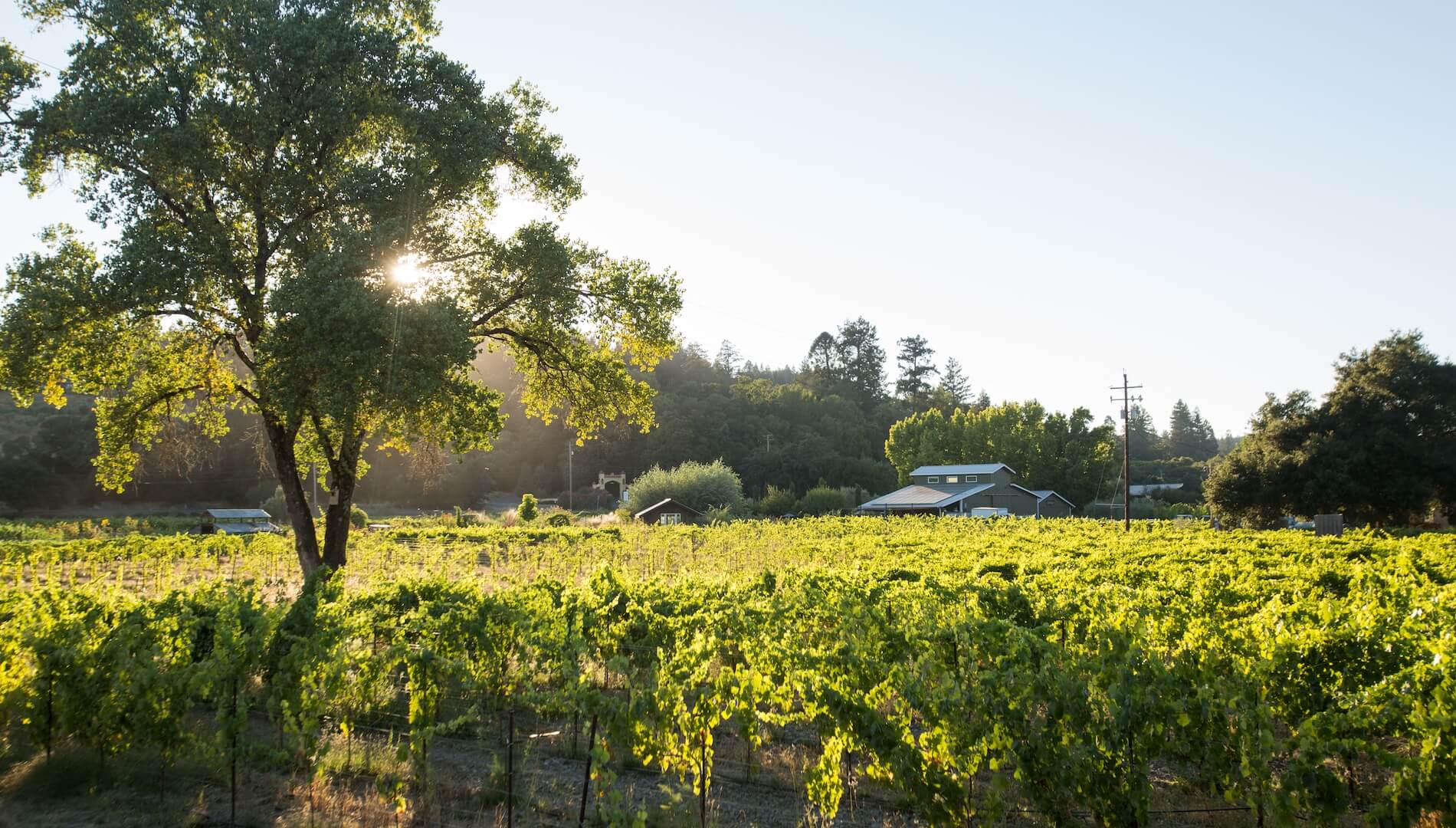
The concept of diversity is central to Biodynamic farming – a concept that embraces both farmed plants and wild plants, and both raised animals and wild animals.
We’ve seen first-hand how successful this approach is, and what a crucial role animals play in both fertility as well as pest management.
The pigs we raise, and the sheep we periodically bring in to graze, contribute manure that is rich in beneficial organisms that help boost the microbial life in the ground, and build soil. But equally important are the beneficial birds, bees, and insects that our diverse environment attracts and sustains.
The underlying philosophy is simple yet profound: nature knows how to take care of itself – but only if we let it.
Sheep in the Vineyard: Living Mowers That Support Soil and Pest Management
Grazing sheep exemplify what many regenerative farmers call “nature’s maintenance crew.” These gentle grazers provide multiple benefits to vineyard ecosystems—all while supporting the health of vines in ways that mechanical equipment simply cannot match.
We’re in the process of completely restructuring our vineyard trellis system to allow us to have a small flock of sheep in field year-round, complete with guard dogs to protect them from predators like mountain lions.
During the growing season, this will allow the sheep to move methodically through designated vineyard rows, targeting specific weeds that compete with vines for nutrients and water. Unlike mowing, which cuts weeds at a uniform height, sheep graze selectively, often preferring invasive species like wild radish, mustard, Canada thistle, and star thistle—exactly the plants vineyard managers want to control. This selective grazing reduces the need for herbicides while maintaining beneficial ground cover plants that support soil structure.
Sheep are known to provide what’s known as micro-tillage through their natural movement patterns. Their hooves create gentle soil aeration around vine roots while their trampling action helps incorporate organic matter into the soil surface. This natural soil disturbance feeds the microbial communities that are essential to biodynamic farming approaches without the compaction that heavy machinery can cause.
Beyond vegetation and soil management, these grazers help disrupt pest lifecycles as they move through areas where these pests would normally be undisturbed unless attacked with chemical pesticides.
Additionally, sheep naturally fertilize as they graze. Their manure deposits nutrients directly into the soil in a slow-release form that vines can access throughout the growing season, reducing or eliminating the need for synthetic fertilizers while building long-term soil fertility.
The timing is particularly crucial during post-harvest cleanup. Sheep in vineyard systems help eliminate fallen fruit and leaf litter that harbor overwintering adult insects and larvae, reducing next season’s pest pressure naturally.
Wild Birds for Pest Control: Pecking Through Insects, Naturally
Our farms boast an incredibly diverse spectrum of plants, which naturally attracts what local birdwatchers tell us is one of the highest density, most diverse wild bird populations in the entire Dry Creek Valley.
Those wild birds operate as mobile pest management units, naturally going where the food is and thus targeting detrimental insects and larvae. We’ve seen, for example, that while leafhoppers cause serious damage in neighboring conventionally-farmed vineyards, we have essentially zero pressure in ours. These feathered allies bring multiple benefits to vineyard pest management—from insect control and weed seed reduction to natural fertilization—all while we’ve observed that they tend to leave beneficial insects largely undisturbed.
These natural foragers excel at controlling ground-dwelling pests that can damage vines and compete with crops. Their instinctive behavior makes them particularly effective against slugs, snails, cutworms, earwigs, and various beetle larvae that hide in soil and debris. Unlike broad-spectrum insecticides, birds instinctively hunt selectively, often ignoring beneficial predator insects while focusing on the pests that cause actual crop damage.
During spring, birds move through newly planted sections where young vine roots are vulnerable to soil-dwelling pests. In summer, they patrol areas where olive fly and scale insects attempt to establish themselves. During harvest season, they help clean up fallen fruit that attracts fruit flies and yellow jackets.