
California’s climate is Mediterranean – something that most who live here understand implicitly. What few understand, however, is that it’s nothing like the climate of Bordeaux or Burgundy.
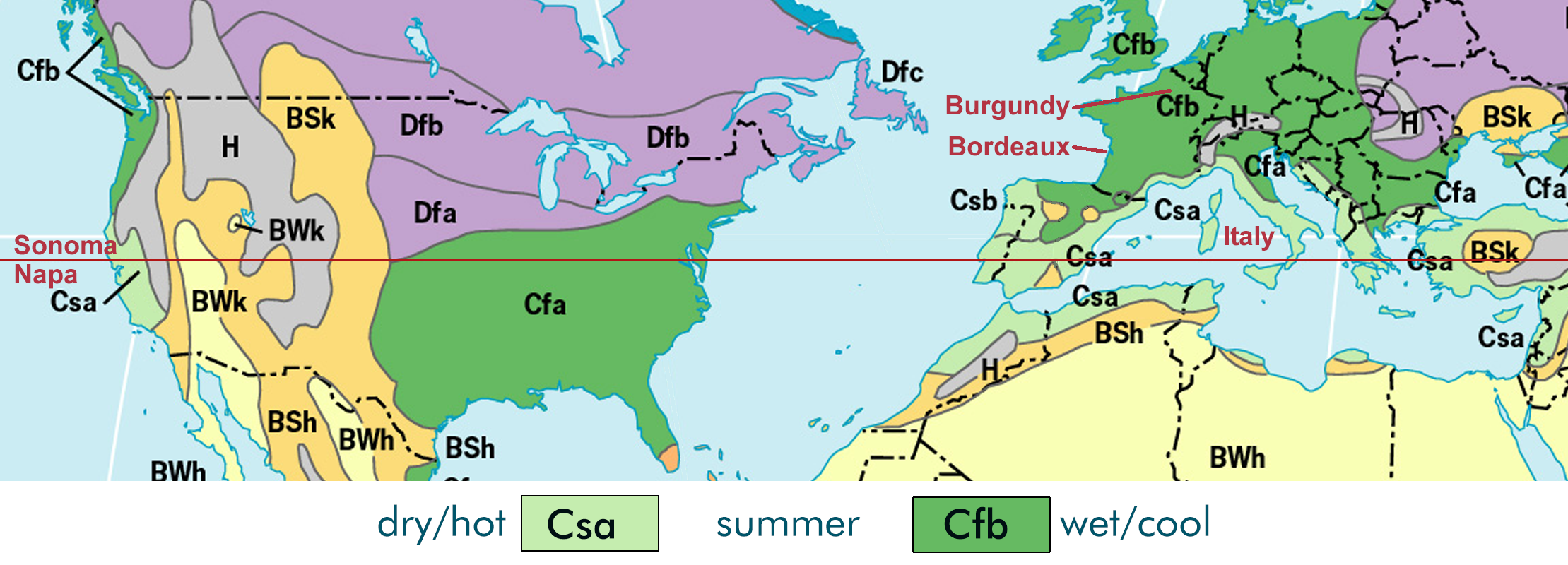
Even fewer realize that the white grapes most commonly grown in California – Chardonnay and Sauvignon Blanc – come from Bordeaux and Burgundy.
As one glance at the climate map shows, though, it makes sense to look to the Mediterranean.
It would be great to be able to say that’s what we did. But the truth is, we were looking for a white to complement our growing family of wines when, in 2014, we stumbled across the amazing Ledbetter Family Vineyards in Lodi – a climate remarkably similar to ours, complete with coastal influence by virtue of the cool breezes that flow from the Bay Area into Lodi every night.
They were growing beautiful Vermentino, mostly to go into jug wines. But their vineyard was perfect, as was the fruit. We purchased a small amount as an experiment, and were blown away by the wine. It fit perfectly with our philosophy of “Grow what belongs here. Be patient.”
What Makes Vermentino One of the Top Italian Whites?
Vermentino has earned its reputation as one of Italy’s most versatile and food-friendly white varietals, and for good reason. This Mediterranean native brings together the best of both worlds: the crisp minerality that white wine enthusiasts crave and the robust character that can stand up to bold flavors.
In Italy, Vermentino is celebrated for its ability to express terroir with remarkable clarity. Whether grown in the granite soils of Sardinia’s Gallura region or along the Ligurian coast, this grape variety consistently produces wines that speak of their place with distinctive voice and personality.
Vermentino’s Origins, Aromatics, and Winemaking Style
Vermentino’s story begins in the western Mediterranean, where it likely originated, before spreading throughout coastal Italy and southern France. The grape’s name itself hints at its character—some etymologists suggest it derives from “vermene,” meaning young shoots, reflecting the variety’s vigorous growing nature. It thrives along the western coast of Italy from Liguria to Sardegna to southern Tuscany, where it develops its signature profile of bright acidity, mineral complexity, and aromatic intensity. California’s varied appellations — from marine-influenced valleys to inland regions cooled by elevation or Delta breezes — provide similar stress conditions that concentrate flavors alongside cooling influences that preserve the grape’s natural vibrancy.
Here, we’ve found that it responds particularly well to our biodynamic farming methods, which we were able to convince the Ledbetters to adopt. As a result, their fruit expresses Vermentino’s truest character, inflected with the nuances of its site and native microflora. And it blossoms in response to our natural fermentation process that relies on the vineyard’s native yeasts to create wines with distinctive aromatics: think wild herbs, sea breeze minerality, and bright citrus notes that dance between lemon zest and white grapefruit.
Does Vermentino’s Crisp, Citrus-Driven Profile Make It the Best White Wine for Summer?
Ask any sommelier about the best white wine for summer, and Vermentino inevitably enters the conversation. This grape variety seems designed for warm weather enjoyment, offering the perfect balance of refreshment and complexity that makes every sip satisfying.
Vermentino’s natural acidity provides the backbone for its summer appeal. That bright, crisp character cuts through heat and humidity while cleansing the palate between bites of food. But unlike some summer whites that prioritize refreshment over complexity, Vermentino delivers layers of flavor that keep you coming back for another glass.
The citrus-driven profile that defines great Vermentino makes it incredibly versatile for summer entertaining, too. Whether you’re hosting a backyard barbecue, enjoying a big summer salad, or pairing it with fresh seafood, this varietal’s bright acidity and mineral finish complement rather than compete with food.
Each year, DaVero’s Vermentino shows notes of Meyer lemon, white grapefruit, and Mediterranean herbs, with a distinctive saline quality that speaks to the grape’s coastal heritage. These characteristics make it not just refreshing, but genuinely food-friendly—a wine that enhances the dining experience rather than merely accompanying it.